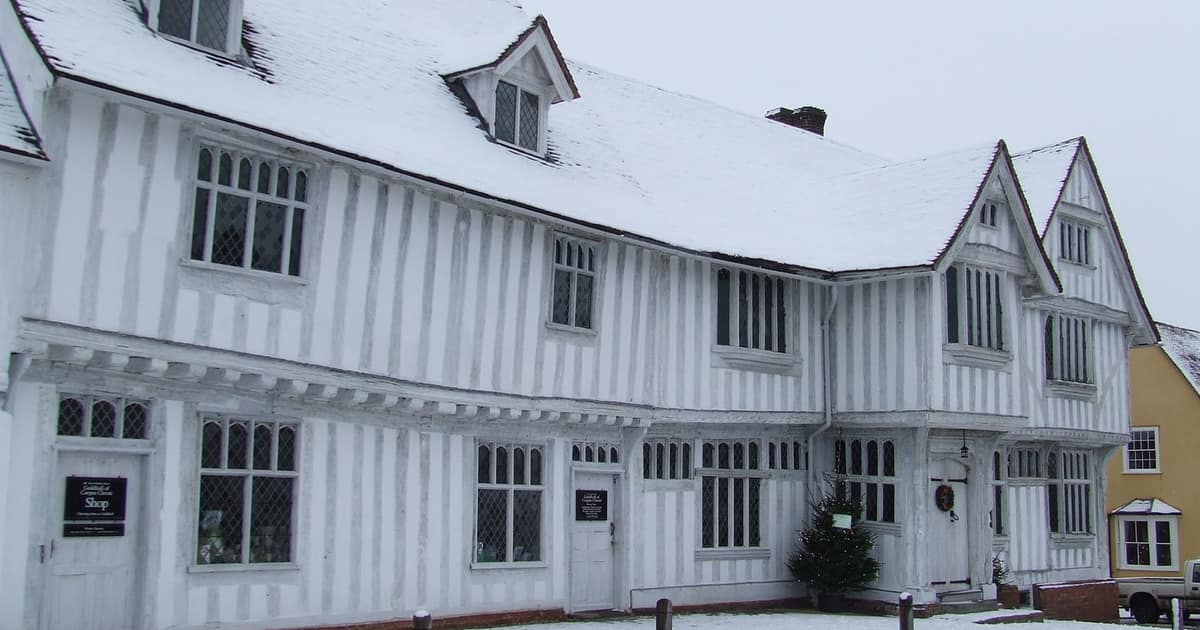
Photo: Keith Evans, CC BY-SA 2.0, via Wikimedia Commons.

In England, a listed building has been judged to be of national importance for its special architectural or historic interest. Grade I marks exceptional interest, Grade II* more than special interest, and Grade II special interest. About 92 per cent of listed buildings are Grade II. The grade shows relative importance, but the need for consent is not limited to the higher grades, and owners of Grade II buildings should not assume they have a freer hand.
The figures here come from the Society for the Protection of Ancient Buildings, which gives Grade I as about 2 per cent and Grade II* as about 5.5 per cent. The official list holds around 400,000 entries.
Three grades, one list
| Grade | Meaning | Share of listed buildings |
|---|---|---|
| Grade I | Exceptional interest | About 2% |
| Grade II* | More than special interest | About 5.5% |
| Grade II | Special interest | About 92% |
It helps to treat the percentages as approximate, since the list keeps changing. If you are walking a town, the practical upshot is that the plain old house on the corner is far more likely to be Grade II than anything grander, and yet it can still be protected from attic to cellar.
What the listing covers
This is where the most common misunderstanding lies. Listing is not just about the front. SPAB explains that, unless parts are specifically excluded, the entire building is listed, including its interior. A staircase, a fireplace or a door can matter as much as a facade.
It can reach further too. Listing can cover attached structures and later extensions, and also buildings or objects within the curtilage, the land around the building. For curtilage structures, the date to know is July 1948: buildings put up before then within the curtilage can be included. Whether something falls within the curtilage depends on layout, ownership past and present, and whether it served the listed building. If a shed, wall or outbuilding is in doubt, ask the local planning authority.
How a building gets on the list
Age is the main filter. As SPAB summarises the principles, buildings from before 1700 that survive in roughly original condition are generally listed, and so are those from 1700 to 1840. Later buildings face more selective review and usually have to be over 30 years old. Anyone can nominate a building, but a nomination is generally only taken up if the building is under serious threat of demolition or major alteration, or falls within Historic England's listing priorities.
A list description is a record written about a building at one moment, and a Georgian front hiding an older frame can mislead anybody. Treat the description as a good starting point, not the final word.
How to check a building
- England: search the National Heritage List for England, maintained by Historic England. It is the official statutory list, and it can be searched by text or by map. SPAB also notes the Enriching the List feature, which adds photographs and information from the public under the official entries.
- Scotland: Historic Environment Scotland decides on listing, using categories A, B and C rather than grades. It says there are around 47,000 listed buildings in Scotland, that the categories reflect relative importance based on period, style or building type, and that they are advisory but affect how a building is treated in the planning system.
- Wales and Northern Ireland: these keep separate lists, so go to the heritage body for the nation concerned.
- If you are still unsure, ask the conservation officer at your local planning authority.
A list entry is useful to local historians as well, and looking one up is among the quickest checks before you add a building to a walk or start work on its history.
When you read an entry on a walk, take the grade as a prompt to ask why. A high grade may point to rare fabric, an important interior or a notable architect, and the description may say which. A Grade II entry can still contain the one detail that makes your walk worth doing, so read past the first line.
When you need consent
Listed building consent is generally required for work that affects a building's special interest. SPAB lists the main cases:
- demolition of all or part of the building;
- extensions and alterations, including changes to the outside, the plan of the rooms, or historic features such as staircases, fireplaces, doors and windows;
- major repair schemes, or repairs that change the character or appearance.
Minor repairs that exactly match the existing design, technique and materials do not usually need consent. There is plenty of grey in that sentence, which is why the advice is to ask the conservation officer at your local planning authority before you start, not after. This article is general information only. If you own a listed building and are planning work, or have bought one with unexplained alterations, speak to the conservation officer and consider advice from a suitably experienced professional.
Three things people get wrong
"It's only Grade II, so it doesn't matter." The vast majority of listed buildings are Grade II, and the grade does not switch off the need for consent.
"Only the outside is listed." As above, the interior is included unless specifically excluded.
"Listed means old." Usually, but not necessarily. Buildings of more than 30 years old can qualify, so a 20th century building can be on the list. And not every old building is on it, particularly if it has been heavily altered.
Listing reaches into some unexpected corners. Even a commemorative plaque can be affected: English Heritage warns that listed building consent may be needed before one of its plaques can go up.
6Next stopResearch the history of your house