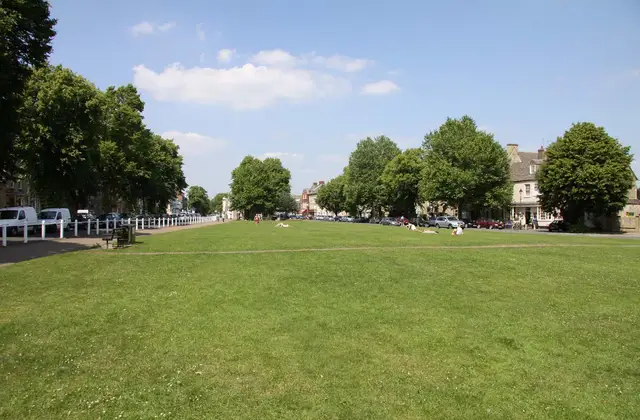
Photo: Steve Daniels, CC BY-SA 2.0, via Wikimedia Commons.

How to plan your own town history walk
A self-guided route needs an old map, a sense of the medieval plan and a short list of stops you have checked on foot.
The trail board
Every article, numbered in the order we would walk them. Each one stands by itself too.
Photo: Steve Daniels, CC BY-SA 2.0, via Wikimedia Commons.
A self-guided route needs an old map, a sense of the medieval plan and a short list of stops you have checked on foot.
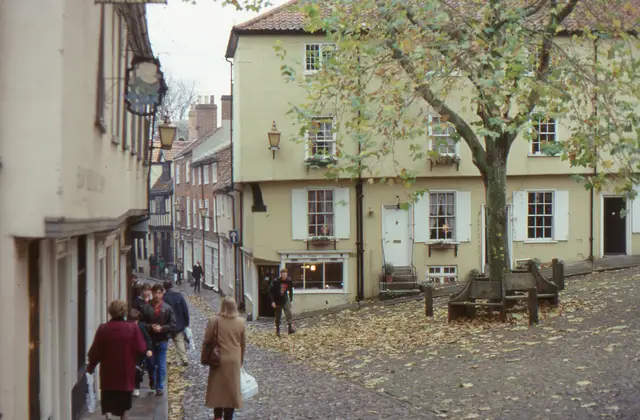
Photo: Christopher Hilton, CC BY-SA 2.0, via Wikimedia Commons.
Brick bonds, window panes and date stones will give you a rough period from the pavement. They will not give you a year.
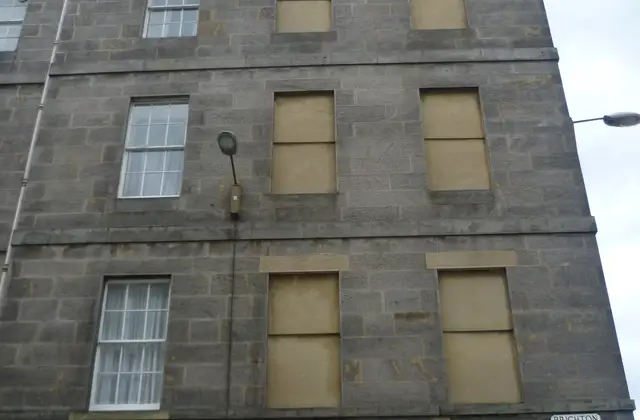
Photo: Kim Traynor, CC BY-SA 3.0, via Wikimedia Commons.
Some were, and many were not. How the tax worked between 1696 and 1851, and how to judge a blank window for yourself.
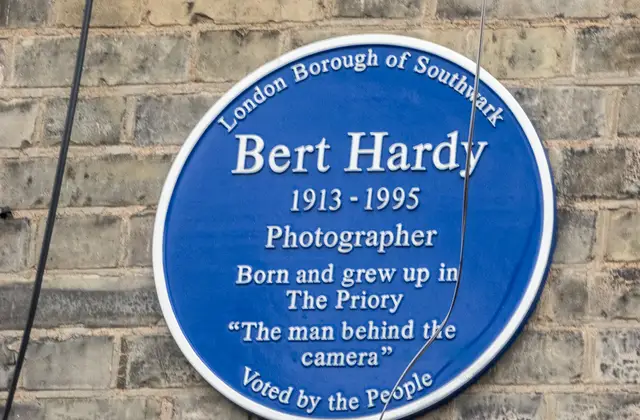
Photo: Christine Matthews, CC BY-SA 2.0, via Wikimedia Commons.
London's official scheme has strict rules: 20 years dead, a surviving building, and a long wait. Plenty of round plaques follow none of them.
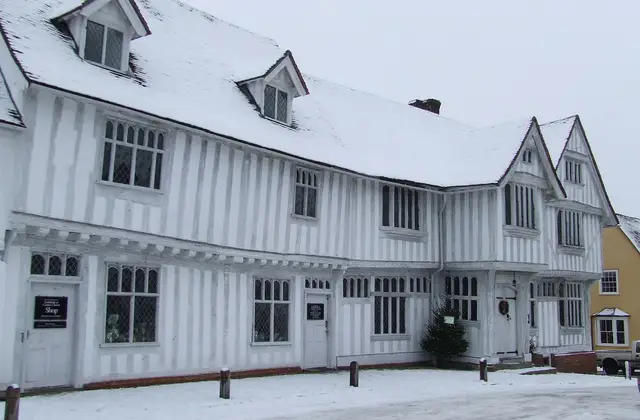
Photo: Keith Evans, CC BY-SA 2.0, via Wikimedia Commons.
Grades show relative importance. They do not change what is protected, and a listing nearly always covers the inside as well.
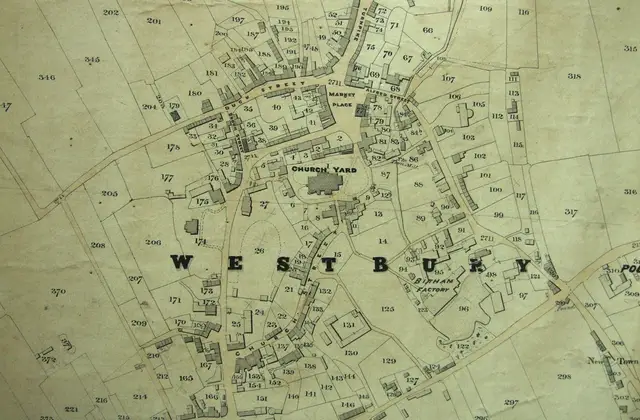
Map: Cotterells & Cooper, Surveyors, Bath, Somerset, public domain via Wikimedia Commons.
Start at the local archive, then work backwards: the 1939 Register, the census, the 1910 valuation and tithe maps.


